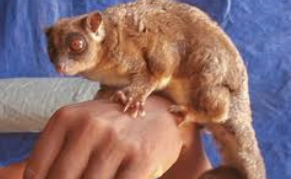
A marsupial native to New Guinea and Australia, thought to have been extinct for 6,000 years, was discovered by biologists Tim Flannery and Kristofer Helgen in 2026. The discovery was made in West Papua on March 26th, 2026. It is extremely endangered because of the mass deforestation of Papua New Guinea and West Papua.
The ring-tailed glider is part of the genus Tous, which was only ever known because of fossils that scientists have uncovered. As a result of finding only fossils of this lost genus, it was considered extinct. Although many sightings were reported in 2015, scientists had actually found one until now. (2026.) The genus Tous can be recognized by its tiny size, small, ring-like ears, and curling, thin tail.
The ring-tailed glider is nocturnal, eating trees, sap, and possibly bugs and fruit. They also give birth once a year. (In their mature, adult state, of course.) Not much else is known about this species other than what was just listed. The species is currently being studied, so more information about the species can be expected soon on the Australian Museum records website, which is where the discovery’s details are noted.
Works Cited:















Grace • Mar 22, 2026 at 10:33 pm
Wow, so cool and so cute!!
Kathleen • Mar 21, 2026 at 1:23 pm
This was a very interesting article. It prompted me to dig deeper to find more information about them. I didn’t realize they are a part of the same mammal family as kangaroos and koalas.
Audrey Sullivan • Mar 13, 2026 at 12:48 pm
Cool!
Ashleigh.M • Mar 13, 2026 at 11:44 am
YASS timothy!!!!!
Cece Grezlik • Mar 13, 2026 at 11:41 am
Sooooo cool! Love to see more info on how they are going to bring it back to life!
Timothy Guideau • Mar 13, 2026 at 10:39 am
This is just a guess, but I assume the reason for the red eyes is the same as the reason for some hamster’s red eyes. The lack of melanin can change eye color in some rodents.